Eric Henty Fine Art
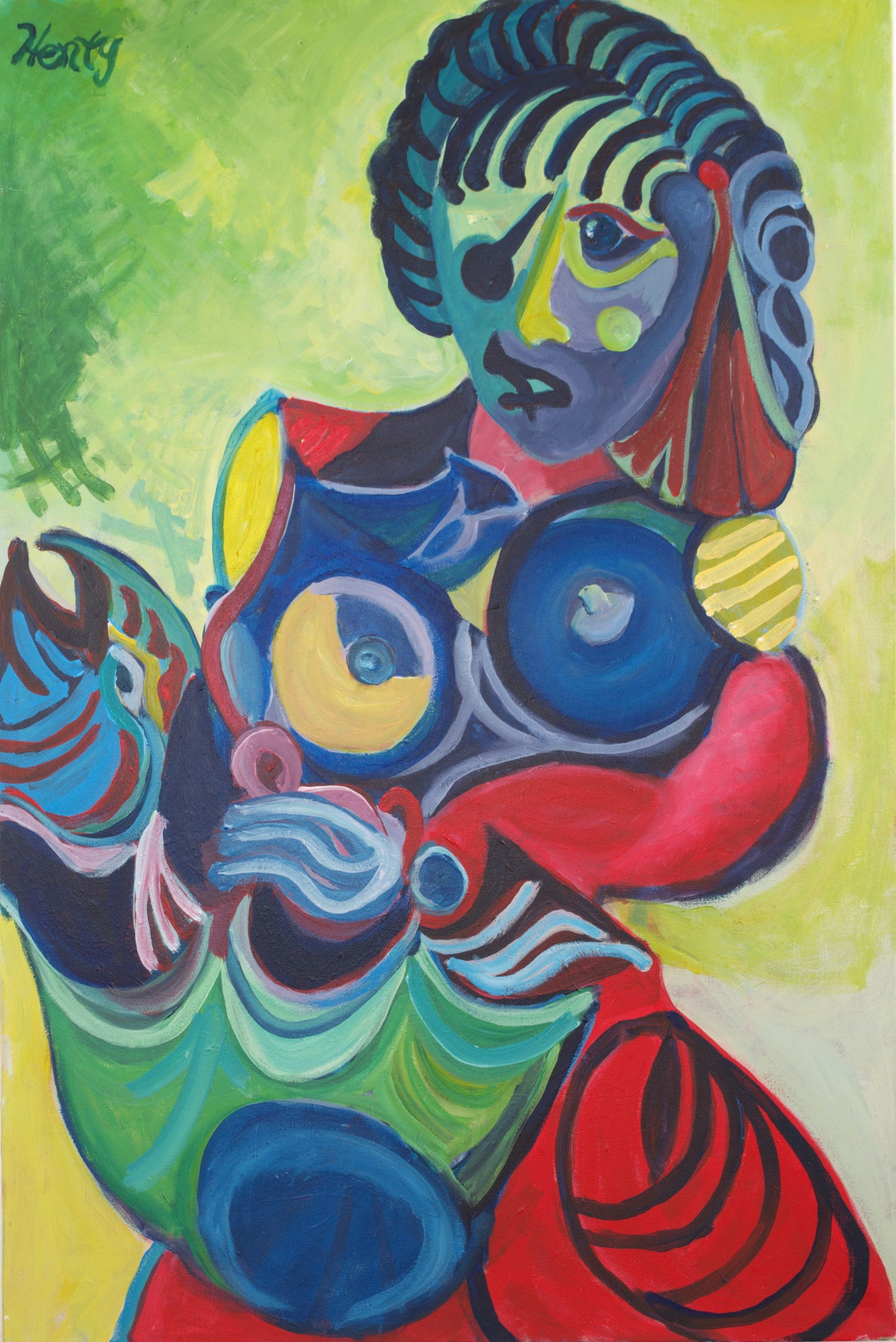
The Gift of the Sea, 24"x36", Acrylic on Canvas, 2025
The Gift of the Sea, 24"x36", Acrylic on Canvas, 2025
Couldn't load pickup availability
In The Gift of the Sea, Eric Henty captures a moment of joyous offering—a young woman cradling a great fish in a basket, her form alive with color and rhythm. The scene is at once humble and divine, grounded in everyday gesture yet elevated to the realm of archetype. The woman’s face is a mosaic of shifting hues—emerald, violet, ochre, rose—each plane suggesting a different emotion, a different facet of her being. Her expression is thoughtful yet serene, as though she carries within her both the mystery of the deep and the calm of the shore. The colors are bold but balanced, each tone vibrating in harmony, echoing the pulse of the ocean that sustains her gift. The fish, rendered in sweeping arcs of blue and green, becomes more than a catch—it is the symbol of nourishment, generosity, and renewal. In myth and art alike, the fish represents life itself, the bounty of nature freely given. The basket she holds thus becomes a vessel of gratitude and hope, a reminder that abundance flows most freely from hands that honor it. Behind her, the luminous yellow-green background radiates with spiritual vitality. It suggests sunlight filtering through shallow waters, or perhaps the divine aura of renewal. The interplay between the warm greens and cool blues mirrors the balance between human and nature, body and spirit, action and reflection. Henty’s composition, both structured and fluid, bears the hallmarks of Cubist influence while transcending it through emotional clarity. Each curve, each contour, participates in the rhythm of giving—everything within the frame seems to circulate, breathe, and expand. The Gift of the Sea speaks to an eternal truth: that creation is an act of offering. The young woman, in her simplicity and grace, stands as an emblem of humanity’s partnership with the earth. In her arms she holds not just the sustenance of the body, but the abundance of the soul—the living proof that the sea still gives, and that gratitude is the highest form of art.
Share