Eric Henty Fine Art
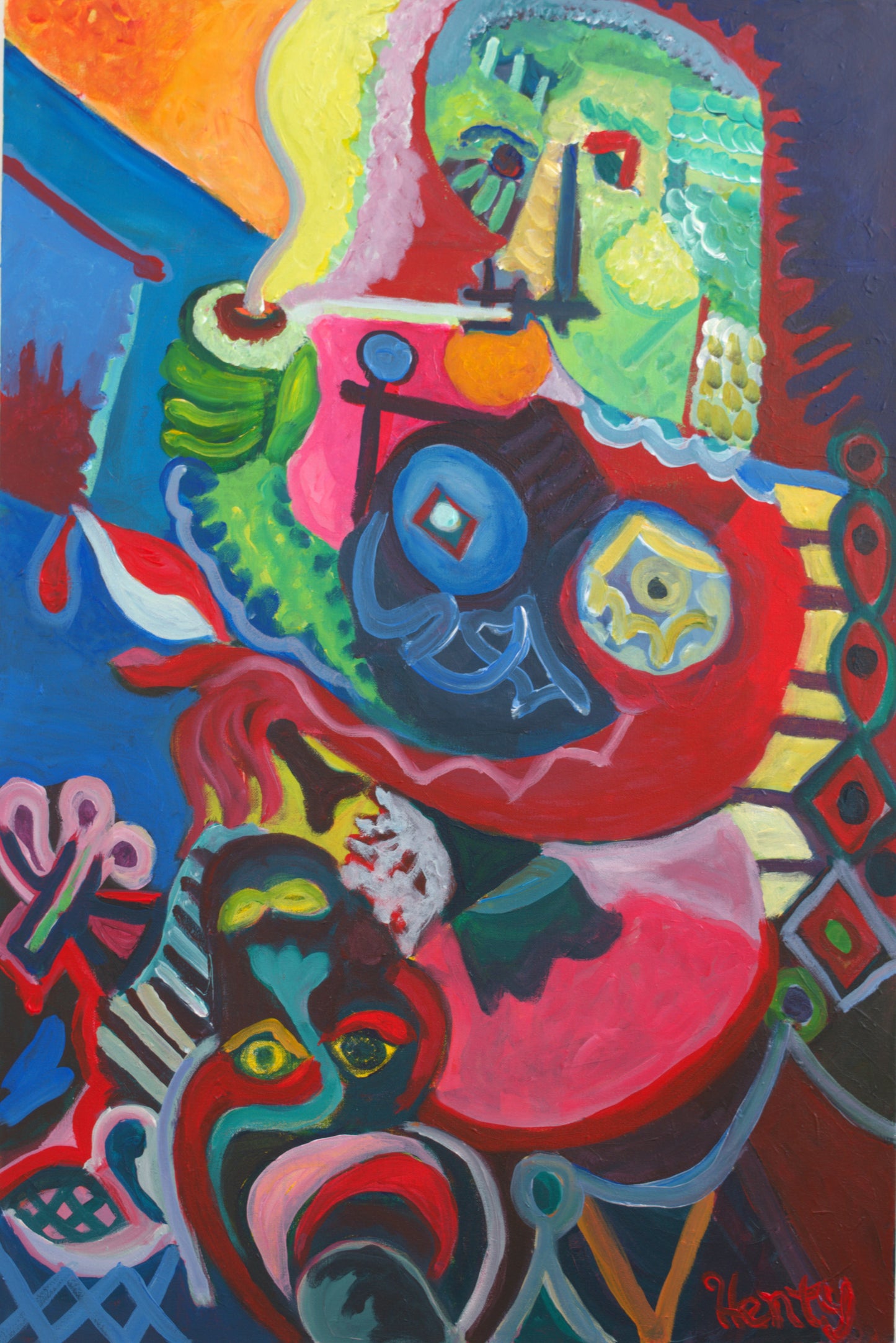
Woman with Bull's Head, 24"x36", Acrylic on Canvas, 2025
Woman with Bull's Head, 24"x36", Acrylic on Canvas, 2025
Couldn't load pickup availability
This painting situates violence not as spectacle, but as moral necessity. A seated woman—calm, composed—holds a pipe, a bloodied knife, and the inverted head of a bull. Long a symbol of unchecked force, virility, and danger, the bull here has been subdued. Yet there is no triumph. What we witness is the aftermath, not climax. Authority is claimed without theatrics; victory is silent, earned, and costly. Rendered in fractured post-Cubist planes, the composition compresses psychological tension rather than offering narrative clarity. Acidic greens and blood reds clash, while circular motifs suggest cycles of destruction and renewal. A crimson profile peers from behind, functioning as witness or divided conscience—an acknowledgment that mastery over violence leaves no one untouched. This is not a mythic slaying but an existential reckoning. The beast confronted is internal: fear, rage, moral compromise. The woman’s repose is not passivity but resolution. The pipe signifies contemplation after ordeal; the severed head is not a trophy but proof of passage. Woman with the Bull’s Head affirms a modern truth: civilization is not the absence of violence, but the hard-won mastery of it.
Share